I realize that while I’ve been working as a support engineer for > 5 years now, I’ve not explored sharing more thoroughly what this role actually entails. Now, sat on a moving train mindlessly trying to diagnose why the WiFi won’t connect, I believe this is the perfect time to pen a few thoughts. I have time on my hands, so buckle in.
I'm elated to (finally) announce – I've joined ▲ @vercel
Today was my first day as part of this incredibly talented team and my astonishment/delight/awe at this possibly life-changing opportunity requires way more than 280 characters! 🚀😌
Growing up, I loved to write poems, make art, and participate in debates. Before choosing Computer Science, I had almost picked Graphic Design or English Literature. After careful deliberation that is extra heavy when you’re an international student paying 2x the tuition fee of a local student, I knew Computer Science was an option that matched some of my interests and provided ample opportunities to grow.
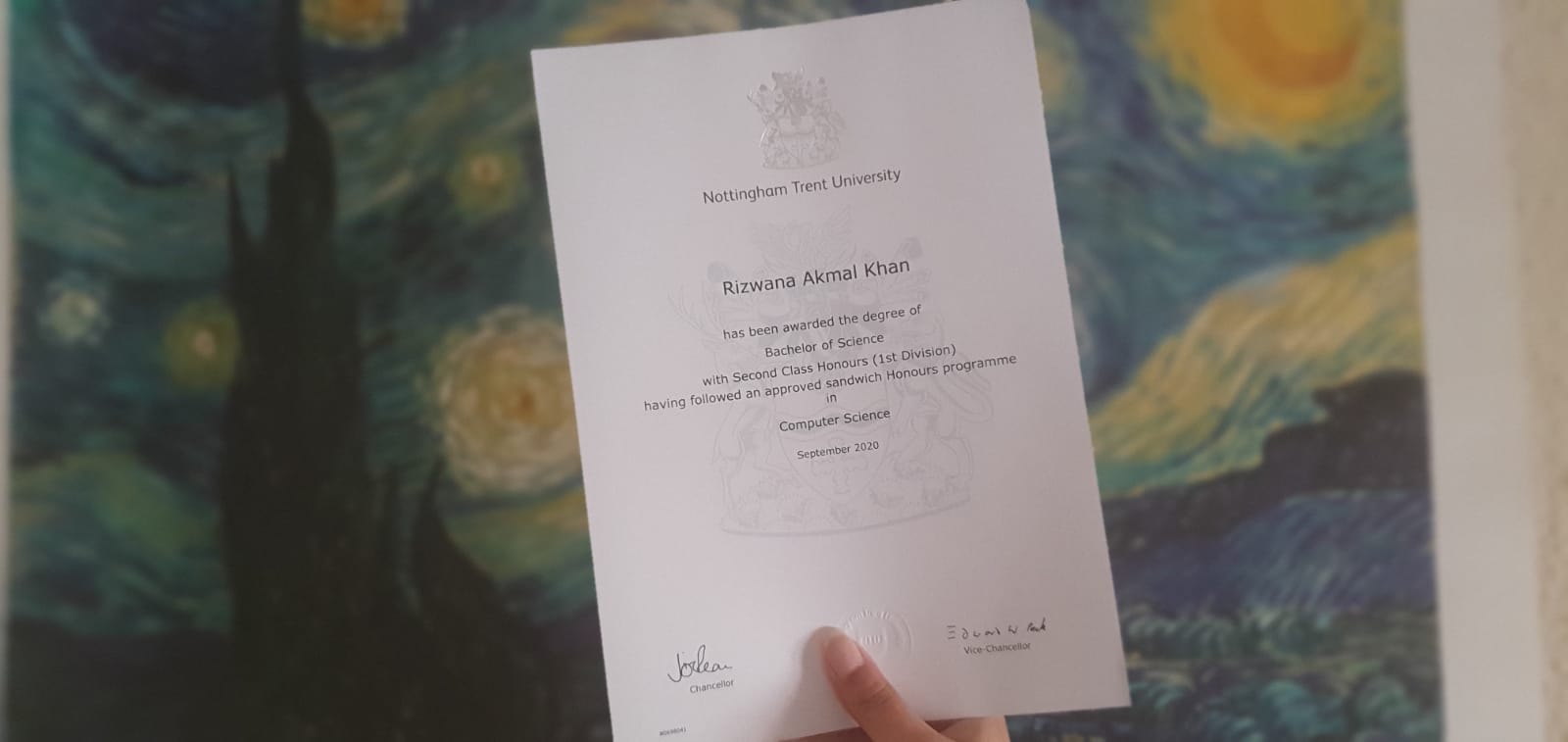
Still, once I had started my university course, I became hyperaware that I was a creative person. This led to that age-old self-doubt of “what if I’m not technical enough?”. I was sat alongside folks who were programming since they were 4 (okay, maybe I exaggerate but my coursemate (+ great friend, mentor) Daryl definitely picked up a keyboard before he picked up a milk bottle). Through the wonder of meeting multiple deadlines, throwing myself into hackathons, and being a sponge around intelligent, technical professionals at local meetups — the voice of self-doubt became quieter. I also learned numerous things every day in a year-long practical placement at a software agency. Finally, I had become “technical” and now I had an undergraduate degree to hang on the wall to prove this.
thank u to the postman for delivering this today 📮✨
me (now), thinks back to me (in 2016), lost, on my way to uni for the 1st time, walking around in circles following google maps; much has truly changed ⏳
(📸 - @akmal_farhana)
#RizumingUni
I graduated in the year 2020 when life was turbulent to say the least. Joining a startup I had only heard of in the context of Next.js as a Customer Success Engineer (we later renamed to Customer Support Engineer), I felt excited and nervous. My first day, Slack went down because I’m convinced The Universe was preparing personally to welcome me to the startup life. Onboarding was simply shadowing my manager (shoutout Mr Sweeney) as he replied to customers, in Zendesk, from a growing list filtered oldest-to-newest. I marveled at the breadth of topics (from observing the build pipeline to understanding function errors, etc.) we covered even in the first 20-30 minutes. As is customary at any fast-paced startup, I learned everything by jumping into action (or as we like to call it: iterate to greatness).
It is important to acknowledge that Support can potentially have a bad rep both from customers and industry peers. Sure, in a utopia, no one needs support because everything is perfect and there are no bugs or flaws. However, in this world, customers do need to reach out when their experience does not match their expectations. This means a support engineer is the first point of (human) contact; we are a collective listening ear for customers who may be feeling agitated, frustrated, or let down. To a customer, their issue is the only issue. No customer can, thus, completely relate to you trying to effectively, efficiently, and empathically (my favorite Es!) support all the other customers, too. In this situation, a support engineer has a duty of care AND speed. For me, personally, I’ve benefitted greatly from sticking to a Pomodoro timer and planning my day, early, so I know I have dedicated time set aside to dig deep into issues.
It is no industry secret that support engineering is paid less than traditional engineering roles. This may be one reason that it is assumed to demand less technical acumen. When (in my biased opinion..) in reality, we’re comparing apples to oranges. With artificial intelligence (on its way to?) superseding our own intelligence, the definition of “technical” is blurring, quickly. What is surfacing, instead, is how well a team of human beings can unify as same team with sincerity and humility, to serve customers. Without its passengers to witness the skies, a floating air balloon sounds like a lonelier affair.
Even with AI, each support team will be balancing the reactive versus proactive nature of work. The concept of when to focus on preventing support tickets from arising versus when to resolve existing support tickets. Both are possible but there is no perfect recipe and the split largely depends on how fast a company is scaling and how many resources are available. In lieu of a framework, what I’ve learned in my 5 years of supporting customers is that much like life has different seasons, you have to respect the ebbs and flows of work, too. As long as you’re adaptable and open yourself to the possibilities of wonder in reactive and proactive work, all is within reach and FTW.
So, the next time you support someone or are in need of support yourself: I hope you remember the ramblings of someone aboard a train with everything but…a functioning WiFi.
A reminder on this last working day of 2021: support your Support team(s) 🫀
Until next time,
Riz